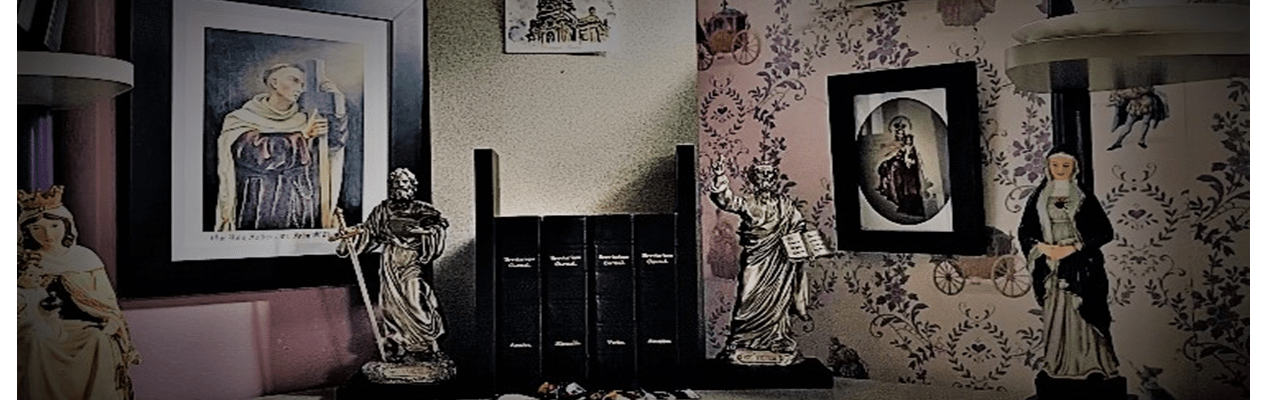
Correction: my below video only talks about the FSSP, but as this was from three years ago almost and I have changed so much with having my blinders removed, so to speak, I fully endorse any Latin Mass group: SSPX, FSSP and the Institute of Christ the King. I also support independent, because of Father Paul Kramer’s email to me about independent groups operating outside the current hierarchy:
“The right and duty of Catholics to operate independently of a perverted or counterfeit hierarchy: The phenomenon of “independent clergy”, i.e. priests and bishops, exercising their ecclesiastical ministry independently of so called “legitimate pastors” who refuse to permit Catholics to observe the law of God, which (according to the most solemn pronouncements of the supreme magisterium) requires adherence to the traditional rites of the Church. When the rule of law breaks down to the point that the “ecclesiastical authorities” mandate disobedience to divine law, then they must be disobeyed rather than God be disobeyed. It is according to Natural Law that the members of the Church have the right to live and function with the sacraments and rites of the Church according to their state in life and divine vocation. The “ecclesiastical authorities” do not have the authority from God to abolish the life of the Church and replace it with something heretical by imposing a perverted counterfeit Christianity in the name of “obedience”. “We must obey God rather than men.” (Acts 5:29)
There will be great changes very soon (probably next year) which will make it obvious to all (except for those who want to be deceived) that the Vatican is the headquarters of a non Catholic sect. It is better to maintain your status as a Catholic inside the Catholic Church, because all canonical status outside the Church is irregular according to divine law.
When the monarchical rule breaks down temporarily, hierarchical rule comes into force (as Pope Gregory XVI explained in his book*), and when hierarchical rule breaks down, then the Church reverts to the most primitive rule under de facto independent priests and bishops, who do not have ordinary or habitual delegated jurisdiction but supplied jurisdiction according to the principle of natural equity (a principle of natural law recognized explicitly by canonists since the 12th century). Authority is given by God only to accomplish the mission assigned by God, to build the Church but not to destroy it: “For if also I should boast somewhat more of our power, which the Lord hath given us unto edification, and not for your destruction. I should not be ashamed.” (2 Cor 10:8) That authority was given only to be exercised according to Divine Law, because God is the architect and builder: “He was looking forward to a city that has foundations, whose architect and builder is God.” (Heb. 11:10) All laws and precepts contrary to the Law of God and the Divine Constitution and mission of the Church are null and void, because as God’s household: “You are built upon the foundation of the apostles and prophets, Jesus Christ Himself being the chief corner stone.” (Eph.2:20)
* «In the times of the antipopes, as well as of the dead Pope, the form of the government ordained by Christ does not remain obscure, even in a case where there is founded doubt, so that it is not clear who should be venerated for Pope, yes in the case of sede vacante it happens in the Church what happens in different monarchies, in which in time of interregnum the government resides in some senate; as practiced also in the ancient Roman empire, in which the Roman senate commanded in time of interregnum; so in the mean while in those cases the government of the Church is aristocratic. But who does not know that this cannot be its natural state? Who can recognize it from the same dilligence that the Church gave to elect her head, suffering ill from remaining headless for a long time?»
D. Mauro Cappellari ora Gregorio XVI, Op. cit. p. 29 – «Nei tempi degli antipapi, come anche di Papa morto, non resta oscurata la forma del governo ordinato da Cristo, imperciocché sì nel caso in cui siavi dubbio fondato, per cui non si sappia bene chi debbasi venerare per Papa, sì nel caso di sede vacante succede nella Chiesa ciò che succede in diverse monarchie, nelle quali in tempo di interregno il governo risiede in qualche senato; come praticavasi pure nell’antico impero romano, nel quale il senato romano comandava in tempo d’interregno; quindi in quei casi il governo della Chiesa è intrattanto aristocratico. Ma chi non sa, che questo non può essere il suo stato naturale? Chi può riconoscerlo dalle stesse premure che dessi la Chiesa per eleggersi il suo capo, mal soffrendo di starsene acefala per lungo tempo?» “
In Jesu et Maria,
Fr. Paul Kramer
I have had a few friends reach out, relaying the news that they have obtained the four-volume-set of the Divine office in the Carmelite Rite, and another dear priest and his community who have had questions about how to pray this Rite of the Office with his community of men, and what rubrics to follow etc. Over the next few weeks, with the help of Our Sweet Lady, I will be providing a series of four posts (this one included, serving as #1) that will go over specific rubrics and protocols for how to recite the Latin/Carmelite Rite individually. I have prayed it in both settings, in common as well as individually, and have had the privilege of learning a great deal with a community, and alone.
I very much prefer praying it alone. Oddly enough I never liked most forms of prayer in common, whether it be a rosary or the Office, even in the cloister. But I also know that learning how to pray the Old Office is uncommonly difficult. There has been weeping and gnashing of teeth on my end, in the beginning, because prior to religious formation I never prayed any version of the Divine Office (New or Old) and just stuck to praying “many rosaries”. Which is good, but the Office has changed everything about me- from my manner of behavior among other things- utterly and completely transforming my interior. Once I mastered the rubrics, an eagerness took root, to share these glorious riches with other fellow Catholics, who perhaps, might be missing out on hidden treasures, flowing from the Hearts of Jesus and Mary, through the recitation of the Carmelite and Roman Rite Breviaries.
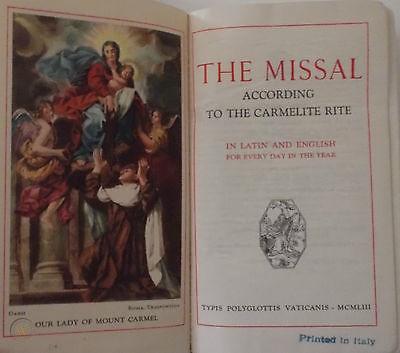
Carmelite Daily Latin Mass Missal (1953)
Carmelite Rite Calendar for Latin Mass:
Instruction videos following the above introduction:
Instructions: Praying Matins on a Feria Day. – Mary’s Secretary (maryssecretary.com)
Instructions: Matins for a 3rd/4th Class Feast – Mary’s Secretary (maryssecretary.com)
Matins for a 1st Class Feast (Carmelite Rite) – Mary’s Secretary (maryssecretary.com)
Matins for Our Lady of Mt Carmel/Sundays – Mary’s Secretary (maryssecretary.com)
REALLY helpful site:
Our Office is different than the Roman Rite and so not all our readings or psalms line up, but sometimes they do and it’s still helpful to see things side by side with the English and Latin as it is super helpful nonetheless to teach you the Office.
The lay faithful are not bound to pray the Divine Office, but priests and religious (in vows) are bound to pray it every day, and if they skip it purposely, it is a mortal sin. I know a lot of holy souls who still choose to pray all the hours in the Roman Rite, though not bound, and others who choose to say all the mysteries of the rosary for their state in life in substitute of the Office. That is between you and Our Lady with what She desires you to do for Her Son. There is also the Little Office of the Blessed Virgin Mary in the Roman and Carmelite Rite, so if you are busy and do not have very much time for the full Office, that is a great alternative. I would only urge you to watch this video of introduction, regardless if you have any desire to pray the Old Office, simply because it is important to understand our faith and the link between the Holy Sacrifice of the Latin Mass and the Old Office.
The Office, in a very profound and glorious way, completes the Mass. I learned more about the Old Mass when I immersed myself in the Divine office, pre-Vatican II than I ever knew before. I also know that a lot of Catholics want to do more for Our Lord when they retire, so if you fall into this category, the Divine Office could very well be the way Our Lord desires you to share intimacy with Him in your state in life. These videos are strictly on how to pray the Carmelite Rite, 1938, Matins only (I do not have the instructions for Lauds-Compline, but it can used and learned through the above link Divinum Officium) but again, I urge you to perhaps watch the introduction and see the powerful resemblance between the Old Mass and the Old Office and how through them, the true definition of sacrificial love is revealed in its pages.
Materials needed for the Latin Mass (some optional materials as well):
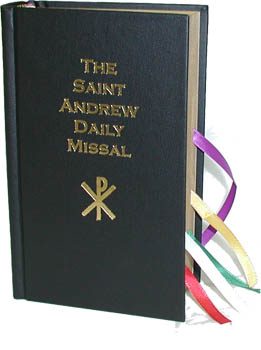
What Latin Mass Missal do I use? PRE-1962 Saint Andrew’s Missal. This Missal has taught me more about my faith than I can express. It’s truly like a history book. I am saddened to say that the Missals that came after 1962 are watered down and lacking in substance. One only needs to put the Saint Andrew’s Missal beside the 1962’s to see the tragic difference (yes, tragic is the word). Yes, they are on the pricier side, but can we really put a price on the beauties, riches and glories of our faith? In all seriousness, if you shop around, you can find good deals!
Do I attend the Novus Ordo? I no longer attend the Bogus Ordo at all, nor the use of Nervous DisORDOr Sacraments. My Baptism, First Holy Communion and Confirmation were all through the New Mass Rites, and while I believe they are valid (for now), but Illicit (unlawful), I believe along with Archbishop Carlo Maria Vigano that there is only ONE Roman Rite, that the New Mass must be permanently abolished, and Vatican II must be declared a failed Council. I believe priests ordained in the New Mass are valid priests but MUST switch over to celebrating ONLY the Latin Mass of the Apostles without fear and without compromise. Now is no time for weakness and effeminacy in the priesthood, but zeal and trust in God and His Holy Mother to do the right thing always knowing Our Lord will provide and reward those most liberally for choosing truth over compromise. For choosing courage over fear; faith over sinful freemasonic obedience. BE MEN, MEN!
What It Actually Means to be Valid Yet Illicit
I knew nothing of the Divine Office before I entered Carmel, but my first and only experience has been using the 1938 four volume set of the Carmelite Rite. I still use them currently, but to those who are not Carmelite, I highly recommend, just like PRE 1962 Missals, the PRE 1962 Breviaries. They are typically VERY hard to find and of course expensive because they are so rare, but I hope that when Holy Mother Church is restored with the triumph of Mary’s Heart, all her sacred books will be restored as well:
Chant Books:
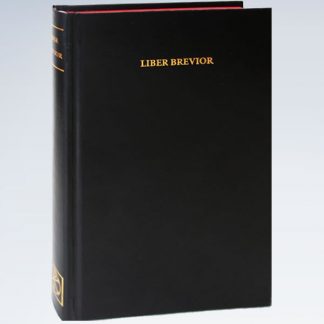

“The grace of office”, literally in this case, is not just a phrase but it is real. When I say the grace of office, this applies to someone, perhaps the Holy Father or one in the Church who is given an office of some sort. In order for them to fulfill it, in a way pleasing to Our Lord, the Holy Ghost gives that individual a specific grace only pertaining to them. This also can be said regarding a member of a religious community who becomes a superior, they feel incompetent, but because they are expected to carry out the duty, they receive supernatural graces for their state in life to perform the task. This also applies to the recitation of the Divine Office.
If you are a member of a religious community and recite the office in common, then there are multiple roles that alternate weekly and the chosen monk or nun, perhaps is reader of the week or has the office of First Psalmist for example, are in charge of certain tasks. They receive “the grace of office”, which entails of “signal” graces AND help by the angels to perform it as perfectly as possible. Knowing when to intone certain antiphons, and to not forget to intone an antiphon, only pertaining to the First or Second Psalmist of the week, First and Second Versiclarians or Hebdomidarian. I, ironically enough, learned more about the Divine Office on my own than I ever did with my former community before pursuing the hermit vocation. When I left Carmel, I had just almost mastered all the rubrics of the Carmelite Rite of the Divine Office, but still had some doubts and questions regarding an area in Matins. I couldn’t help but panic a little because I did not know who to turn to, to receive my answers. I no longer had a Mother Superior to look to in these matters of rubrical questions.
Materials needed for the recitation of the Carmelite Rite of the Divine Office:
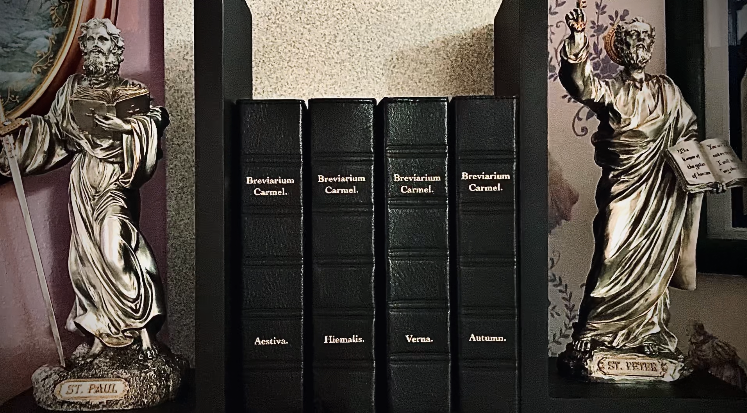
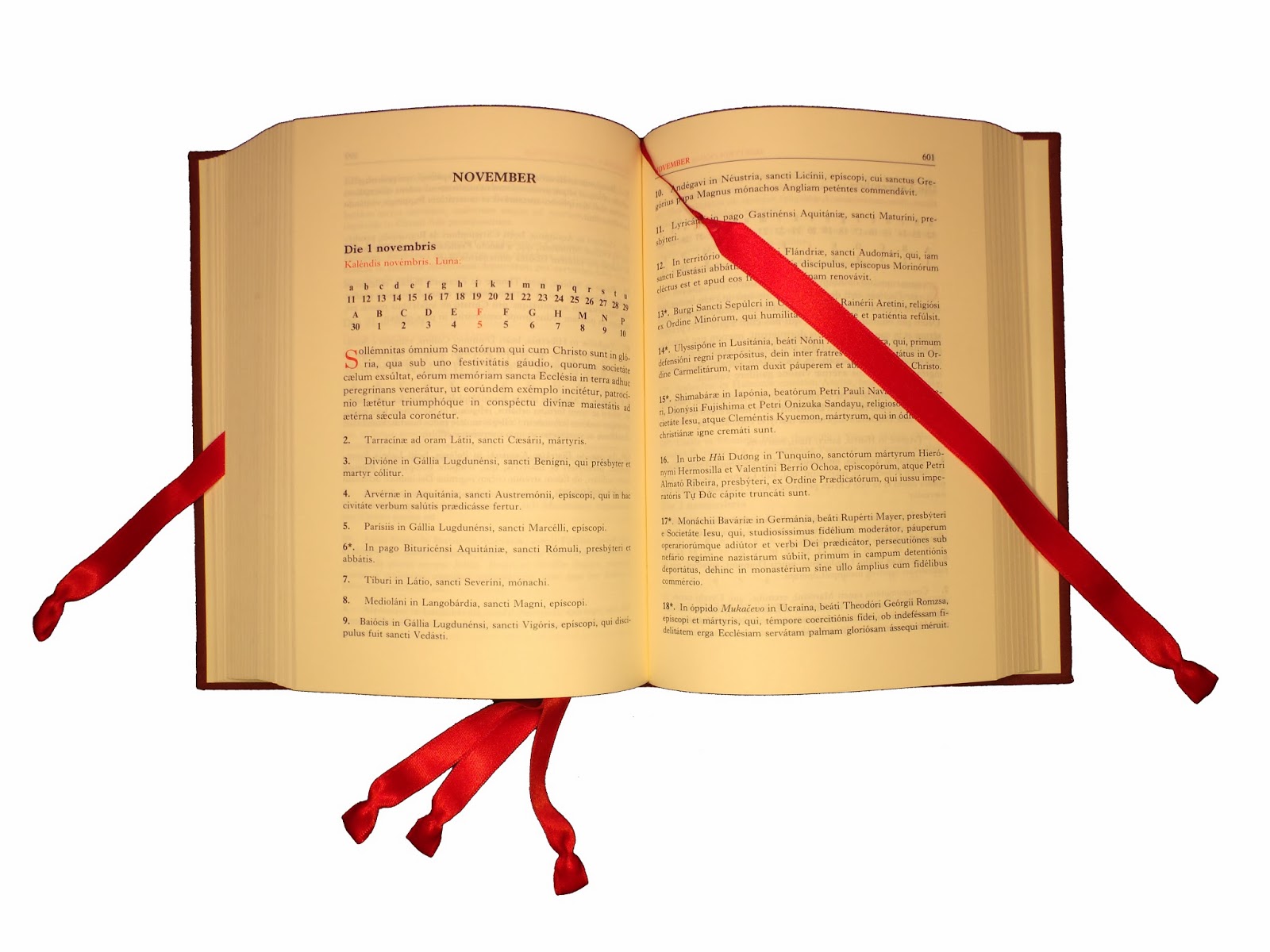
Roman Martyrology on the Above right pictured
When a sister takes vows, she is given greater responsibilities in the Office and in Carmel, there was a section that confused me beyond belief for Matins. Just months before discerning the call of a Carmelite Hermitess, I obtained the four-volume-set of the Carmelite Rite Breviaries, providentially enough on Ash Wednesday of 2020. But as I began the process of learning how to recite the office individually, rather than with a community, I was still lost on that section I formerly mentioned. The grace of office, I truly realized, was on my side. There was a moment where I was discouraged because I knew that I needed help and had no one to ask. No one on earth anyway, and I say this because very few souls to begin with pray the Roman Rite, and so, finding someone who prays the Carmelite Rite would be one and a million, and the rubrics are not the same either. But how could I forget that if we pray to our angel, Our Lady or the saints, that they will come to our rescue? It was the matter of an instant, the thought popped in my mind, an answer to my question about how to intone a certain blessing for Matins, and it was no exaggeration- BAM- I knew what I had to do…
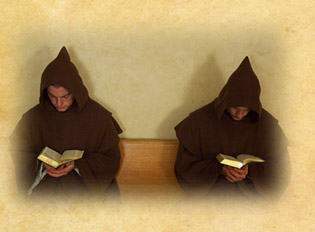
The answer came like lightening. It was a powerful moment for me. This has nothing to do with “I am so clever; I figured it out”. No, it was the grace of office and cooperation with the Divine. The Office is something so sacred, that the angels, are eager to assist us and participate in our act of worship. If someone is given a specific office, what could be higher than a title of DIVINE Office? It is given that title because it surpasses all other offices. When I was learning the Carmelite Rite as a postulant, I would hear some of the Mother’s saying things like, “if Sister so and so forgets her part, pray to her angel to remind her.” I remember a Mother tested this on me, when I forgot to ring the Mass bell during Terce. A thought hit me spontaneously, to “ring the bell”. And later, Mother told me at that exact moment she was staring at me (not in a creepy way) while praying to my angel to nudge me to take care of my office as bell ringer of the week. I never forgot that; a lesson that should console us, that the angels are always ready to assist us in whatever office placed in our care, our state in life or path to eternal life.
*If you are reading this post and have a hard time in general with the Latin, before casting judgement, I simply beg you to watch the video below. It is the best video on the Latin Mass I have ever had the honor of watching. I chose exclusively the Latin Mass when I was 23 years old, during none other than Our Lady’s 100 year anniversary of Fatima. Our Lady led me to a video produced by the Fatima Center called “Secret Still Silenced” and there was no going back for me. Our Lady desires Her children to be saints and worship God in the way he desires and predestined it to be. The Latin Mass is linked to the third Secret of Fatima and if we love Mary, we need to educate ourselves on Her ignored message…
Best Translation to Have in Your Possesion:
Blessed First Friday of Our Lord and Vigil of Our Lady’s First Saturday devotion. Let us be saints and red martyrs for Her Immaculate Heart; for THIS is the age of Mary- AVE MARIA!
RARE 1938 Carmelite Rite Breviary Set, Breviarium Carmelitanum LATIN Leather.
BREVIARIUM Ordinis Fratrum Beatissimae Virginis Mariae de Monte Carmelo
FOUR LEATHERBOUND VOLUMES COMPLETELY IN VULGATE LATIN.
New. Facsimile. Leather bound. Sewn bindings. Gold edges. Ribbons. (See photos.)
RARE opportunity to acquire an exceptionally done NEW facsimile COMPLETE FOUR-VOLUME SET of the 1938 CARMELITE RITE BREVIARY — this edition was the LAST traditional EDITION EVER PUBLISHED before Vatican II.
O. Carm. The Carmelites of the Ancient Observance known also as The Brothers of the Blessed Virgin Mary of Mount Carmel pre-date the Discalced Carmelite Order (O.C.D.) and, unlike the Discalced Carmelites, who were forced at the time of their foundation to adopt the Roman Tridentine Rite, celebrated Holy Mass and the Office “according to the Rite of the Church of the Holy Sepulchre in Jerusalem” : a rite which incorporates in its solemn form elements of the Eastern Rites and in its less solemn form elements of the various Rites or Uses of the Dioceses of England to which the early Carmelites migrated following the Crusades SARUM * YORK * FORD * … the DOMINICAN RITE influenced the O. Carm.
Liturgical Feasts and Feasts proper to the Carmelite Order: Our Lady of Mount Carmel on July 16, Saint Elias on July 20 ) * the special Carmelite Calendar – FILLED with proper feasts of Our Lady observed nowhere else * the Carmelite version of the PRIME preces, incorporating the Trisagion of the Eastern Church: Sancte Deus * the special antiphons at the Nunc Dimittis to mark the seasons: just as the SARUM RITE did and as you thus find in many Anglo-Catholic Breviaries * the ANCIENT MONASTIC version of the Breviary Hymns, not the classicized version of Urban VIII (see Advent: CONDITOR rather than CREATOR Alme Siderum) * Special Hymns for Compline according to the various seasons, all of which were incorporated by the Roman Rite into the Vatican II Liturgia Horarum * the special Carmelite Rite endings to the Hours during the Sacred Triduum * the Litany of the BVM with the special O.Carm. Carmelite Rite additions * the Prayer of St Simon Stock: Flos Carmeli *
“New Liturgical Movement .org ” [“Carmelite Rite, Quick Summary”]
The Carmelite Rite Breviary
The Divine Office also presents some noteworthy features. The first Vespers of certain feasts and the Vespers during Lent have a responsory usually taken from Matins. Compline has various hymns according to the season, and also special antiphons for the Canticle. The lessons at Matins follow a somewhat different plan from those of the Roman Office. The singing of the genealogies of Christ after Matins on Christmas and the Epiphany gave rise to beautiful ceremonies. After Tenebræ in Holy Week (sung at midnight) comes the chant of the Tropi; all the Holy Week services present interesting archaic features. Other particularities are the antiphons Pro fidei meritis etc. on the Sundays from Trinity Sunday to Advent and the verses after the psalms on Trinity, the feasts of St. Paul and St. Laurence. The hymns are those of the Roman Office; the proses appear to be a uniform collection which remained practically unchanged from the thirteenth century to 1544, when all but four or five were abolished. The Ordinal prescribes only four processions in the course of the year: on Candlemas, Palm Sunday, the Ascension and the Assumption.
The calendar of saints, in the two oldest recensions of the Ordinal, exhibits some feasts proper to the Holy Land, namely some of the early bishops of Jerusalem, the Biblical Patriarchs Abraham, Isaac and Jacob, and Lazarus. The only special features were the feast of St. Anne, probably due to the fact that the Carmelites occupied for a short time a convent dedicated to her in Jerusalem (vacated by Benedictine nuns at the capture of that city in 1187), and the octave of the Nativity of Our Lady, which also was proper to the order.
 Mary's Secretary
You must be logged in to post a comment.